A Portrait Gallery Visit for Reading Beauty Ideals
Use a portrait gallery visit to see how pose, clothing, grooming, and artistic choices shape beauty ideals—and separate visible style from assumptions.
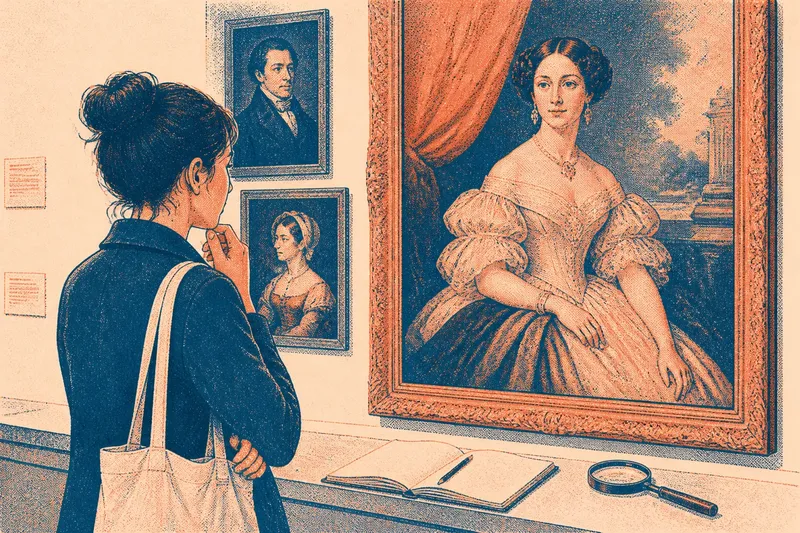
What can a portrait really tell you about beauty—and what are you simply bringing to it? A portrait gallery visit can help you read beauty ideals by looking closely at pose, clothing, grooming, and artistic choices rather than treating a face as a timeless standard. The trick is to notice when the image gives you evidence and when your own assumptions fill the gaps.
Start with the frame
Choose one portrait that holds your attention, then pause before deciding whether the person looks beautiful, severe, fashionable, or familiar. First notice what is physically visible: the direction of the head, the placement of the hands, the clothes, the hair, and the space around the figure.
Then look at the frame itself. A full-length portrait gives clothing and posture room to speak; a close view makes facial expression and grooming more prominent. A painted curtain, landscape, desk, or piece of jewelry may also shape how you read the sitter. These choices are part of the portrait’s message, not neutral decoration.
Try separating observation from interpretation. “The sitter’s chin is lifted” describes what you see. “The sitter is proud” is an interpretation. It may be a reasonable one, but the difference matters: a pose can suggest confidence without revealing what the person felt.
When pose feels like personality
A composed stance can look self-possessed, distant, or stiff depending on the viewer. That uncertainty often comes from treating a carefully arranged pose as an unfiltered glimpse of character. Portraits are constructed images, and the sitter’s body may be positioned to communicate status, modesty, authority, ease, or another quality valued by the maker or patron.
Look at the shoulders, hands, and gaze before settling on a personality word. Are the hands displayed, occupied, or hidden? Does the sitter meet the viewer’s eyes, look away, or focus on an object? Ask what those choices invite you to feel, then keep that response distinct from a claim about the sitter’s inner life.
Say you encounter a portrait in which a seated figure rests one hand on a book and looks directly outward. You might first read the pose as scholarly and assured. If you then notice the formal clothing, the carefully arranged setting, and the book’s prominent placement, you can describe how the image builds that impression without assuming the sitter’s private temperament.
When clothing becomes a beauty rule
Portrait clothing can make an ideal seem natural simply because it is presented with confidence. A fitted bodice, a high collar, a particular silhouette, or a richly decorated garment may direct attention toward the body in a specific way. But clothing reflects choices and conventions as well as taste; it does not provide a simple ranking of which bodies were considered beautiful.
Notice how fabric, color, and cut interact with the pose. A stiff garment may encourage an upright posture, while a loose sleeve can create a broad line around the arm. Jewelry or a carefully placed accessory may draw the eye toward the face, hands, or neckline. Ask what the outfit makes prominent and what it leaves less visible.
If the gallery label identifies the sitter’s role or social position, use that information as context, not as a complete explanation. A label may clarify who commissioned an image or how it was intended to be seen, but it cannot settle every question about personal taste or the meanings a later viewer will find.
When grooming seems universal
Hair, facial hair, cosmetics, and skin finish are easy to read through present-day habits. A smooth complexion may look like an ideal of youth to one viewer, while another may see the painter’s handling of light and texture. A hairstyle that seems unusual now may have been carefully chosen, shaped by custom, or simply represented according to the artist’s style.
Rather than guessing at a beauty routine, describe the visible result. Is the hair arranged close to the head or allowed to spread around it? Does the face appear evenly lit, strongly shaded, or softened by the medium? Is there a visible contrast between the face and clothing? These observations help you talk about grooming without inventing products, procedures, or motives that the portrait does not show.
Also notice the artist’s choices. A painted face may be idealized, stylized, or rendered with sharp detail; a photograph may emphasize different kinds of texture and expression. The image is not a transparent record of a person’s appearance. Its medium and maker shape what you can see.
When eras blur together
It is tempting to arrange portraits into a simple story: one period favored one look, then another replaced it. A gallery rarely supports such a tidy sequence. Different makers, patrons, communities, and purposes can coexist, and a single room may contain images that present very different ideals.
Compare two portraits without turning them into representatives of an entire era. Ask what differs in their poses, clothes, grooming, framing, and expressions. Then ask what the gallery label actually establishes. If you cannot tell whether a detail reflects a broad convention or one person’s choice, leave that question open instead of forcing a historical rule from a single image.
It is not worth trying to identify every garment, pigment, or grooming practice from sight alone. A careful description is more useful than a confident guess. When the label provides a name or context, use it; otherwise, let uncertainty remain part of your reading.
What should you ask?
How do I separate what I see from what I assume?
Write or think of one concrete observation before adding an interpretation: “the hair is covered” before “the sitter is modest.” Then ask what visual detail supports the interpretation and what else might explain it.
Can one portrait represent its period?
One portrait can show how a particular image presents a person, but it cannot stand in for everyone who lived at the time. Compare more than one work and treat broad claims as questions unless the gallery provides clear context.
What if the portrait makes me judge my own appearance?
Notice the comparison, then return to the image’s construction: pose, clothing, grooming, medium, and setting. A portrait presents a selected and shaped appearance, not a neutral standard you need to meet.
How should I use the museum label?
Read it for information it explicitly gives, such as a sitter’s name, the maker, or the image’s purpose. Keep that information separate from details you infer by looking, and let the two kinds of knowledge inform rather than replace each other.
Leave with a sharper eye
Before moving on, choose one detail you nearly overlooked: a turned wrist, a loose curl, a shadow under the chin, or the way a garment interrupts the outline of the body. Ask how that detail changes your first reading. Then consider whether your response comes from the image, the gallery label, or a beauty expectation you already carry.
A portrait gallery visit becomes a useful way to read beauty ideals when you stay curious about both the image and your own reactions. The next time you search for beauty ideals in portraits, look for the choices that make an appearance feel meaningful—and remember that noticing an ideal does not require you to adopt it.